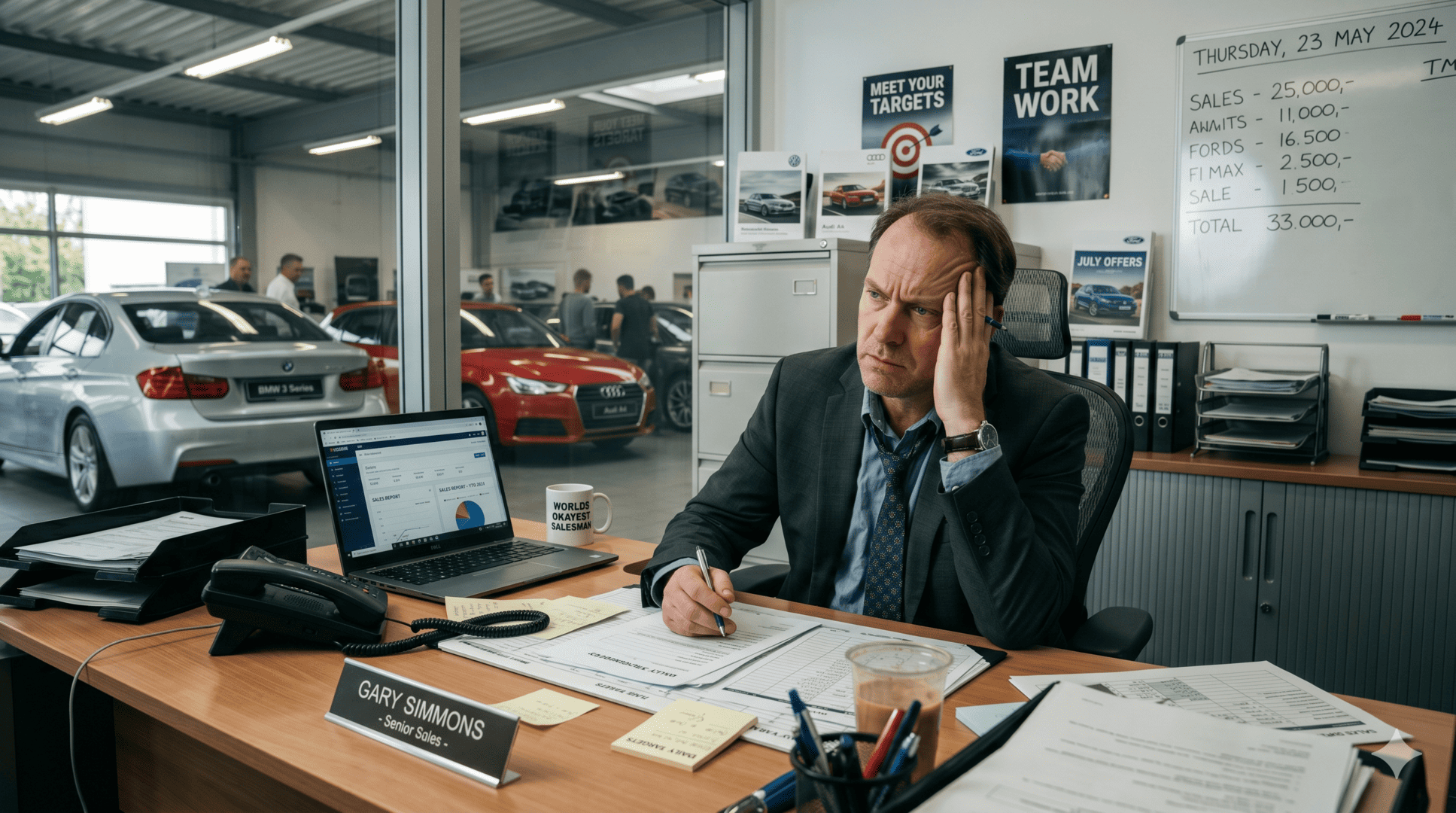
Does this sound familiar? The test drive went well and the prospect loved the car. He spent 15 minutes asking about the engine and he took photos of the interior. He said, “This is exactly what I’ve been looking for.” But then he said the four words that haunt every car salesperson: “I’ll think about it.”
You shake hands and walk him to his car just to never hear from him again.
If you sell cars, this is your most painful revenue leak. Not the people who never showed up. Not the tire-kickers who were never serious. The ones who were serious, who sat in the car, who felt the steering wheel, who could see themselves driving it home — and then vanished into a cloud of “I need to think about it.”
The vast majority of these people aren’t gone. They’re stuck. They need a nudge — not a hard sell, not a discount, just a well-timed, well-worded follow-up that makes it easy to come back and say yes. Gladly, you don’t have to do all this by yourself but let the CalendarApp do all of this for you! Here is how:
Table of Contents
- Why Buyers Don’t Buy on the Same Day
- The Follow-Up Gap: What Most Dealerships Get Wrong
- The Timing That Works: When to Reach Out
- What to Say (And What Not to Say)
- How CalendarApp Automates Post-Test-Drive Follow-Up
- Thomas’s Story: 6 Extra Sales Per Quarter From “Lost” Prospects
- 5 Things You Can Do This Week
- “If They Wanted It, They Would Have Bought”
- FAQ
Why Buyers Don’t Buy on the Same Day
A car is one of the biggest purchases someone makes outside of a house. The decision involves money, financing, insurance, parking, sometimes a partner’s approval. Even when a buyer loves the car, closing on the same day feels like a lot.
They Need to Sleep on It
Buying a car is emotional. The test drive is a high — the new-car smell, the engine sound, the fantasy of ownership. Coming down from that high and making a rational €20,000 decision takes time. This isn’t indecision; it’s responsible behavior. The buyer wants to make sure the morning-after feeling matches the test-drive feeling.
They Need a Second Opinion
Partners, parents, financially-minded friends — many buyers want someone else to weigh in before committing. “I’ll think about it” often means “I need to show the photos to my wife and discuss the financing over dinner.” The decision isn’t no. It’s not yet.
They’re Comparing
A responsible buyer doesn’t buy the first car they test drive — even if they love it. They might have a BMW appointment on Saturday and an Audi appointment on Sunday. They want to compare. After both test drives, they’ll sit down and decide. The dealership that stays in their mind during that comparison — ideally with a timely follow-up — has the edge.
The Financing Wasn’t Sorted
Sometimes the buyer loves the car but the monthly payment isn’t quite right. They need to check with their bank, explore leasing, or wait for a current loan to close. This isn’t a dead lead — it’s a lead with a concrete timeline. A follow-up that coincides with their financing timeline can close the deal.
The Follow-Up Gap: What Most Dealerships Get Wrong
The automotive industry has a massive follow-up problem. And it sits between two extremes: doing nothing and doing too much.
The “No Follow-Up” Dealership
This is surprisingly common. The test drive ends, the prospect leaves, and nobody follows up. The salesperson moves on to the next walk-in. The CRM might have a task set for “follow up in 3 days,” but it gets buried under new leads. A week later, the prospect bought from a competitor — and the salesperson says “he just wasn’t that serious.”
In reality, he was very serious. He just needed a nudge that never came.
The “Aggressive Follow-Up” Dealership
On the other end: the dealership that calls the prospect 4 hours after the test drive, emails the next morning, calls again Friday, sends a “limited time offer” on Saturday, and has the sales manager call Monday. By then the prospect isn’t just uninterested — he’s actively avoiding you. Aggressive follow-up doesn’t signal persistence. It signals desperation.
The Sweet Spot
The best follow-up is one message, at the right time, on the right channel, that makes it easy to re-engage. Not a hard sell. Not a guilt trip about the limited inventory. Just: “Hey, wanted to check in — still thinking about the 3 Series?” That’s it. Friendly, zero-pressure, and actionable.
The Timing That Works: When to Reach Out
Timing is everything in post-test-drive follow-up. Too soon and you feel pushy. Too late and they’ve committed elsewhere. The ideal cadence depends on signals the buyer gave during the visit.
The “I’ll Think About It” Buyer
First follow-up: 2–3 days after the test drive. This gives them time to discuss with their partner, compare with other cars, and settle their thoughts. By day 3, they’re either leaning yes or leaning no — and a well-timed message can tip the scales.
Second follow-up (if no response): 7–10 days after the test drive. This one can reference something specific: “Just wanted to let you know the 330i you drove is still available — a few other people have been asking about it.” Gentle urgency based on truth.
The “Financing Isn’t Ready” Buyer
Follow up when they indicated they’d know. If they said “I’m waiting to hear from the bank this week,” follow up the following Monday. If they said “my lease ends in March,” follow up in mid-February. Match the follow-up to their timeline.
The “Comparing With Another Brand” Buyer
Follow up 3–5 days after the test drive. By then they’ve likely test-driven the competitor too. Your follow-up arrives at the decision point: “How did the comparison go? Happy to answer any questions if you’re still deciding.”
The “Just Browsing” Prospect
Follow up in 4–6 weeks. These leads aren’t ready now, but they might be later. A seasonal follow-up (“new arrivals for spring”) or an inventory update can reignite interest without feeling forced.
What to Say (And What Not to Say)
Messages That Work
3-day follow-up:
“Hey Martin! Wanted to check in after your test drive last Saturday. The 330i is still available if you’re still considering it. Happy to answer any questions or set up a second visit if that would help.”
7-day follow-up (with context):
“Hi Martin — just a heads-up that we’ve had a couple more inquiries on the 330i you drove. Not trying to pressure you — just want to make sure you don’t miss it if you’re still interested. Let me know!”
Financing-timeline follow-up:
“Hey Martin! You mentioned your bank would get back to you this week on financing. How did it go? If the numbers work, I can hold the car for you until Friday.”
Long-term reactivation (6+ weeks):
“Hi Martin! I know it’s been a while since you came by. We just got some new inventory in that reminded me of what you were looking for. Want me to send you a few options?”
Messages That Don’t Work
“Hi, following up on your test drive. Are you still interested?” — Generic. No value. Easy to ignore.
“This is a limited time offer — act now!” — Manufactured urgency is transparent. Serious buyers find it off-putting.
“My manager can offer you a special deal if you come in today.” — The classic used-car tactic. It worked in 1995. It doesn’t work on WhatsApp in 2026.
How CalendarApp Automates Post-Test-Drive Follow-Up
Most salespeople know they should follow up. Most salespeople also have 15 other things demanding their attention. The follow-up task gets pushed, forgotten, or done half-heartedly. CalendarApp makes it systematic.
Automatic Follow-Up on the Right Channel
After a test drive that doesn’t convert, CalendarApp sends a follow-up at the right interval — on the same channel the prospect originally used. If the initial conversation happened on WhatsApp, the follow-up goes to WhatsApp. The message references the specific vehicle, uses your dealership’s tone, and makes it easy to re-engage.
Because the AI knows the conversation history, it doesn’t send generic messages. It says: “the white 330i you drove last Saturday” — not “the vehicle you inquired about.” That specificity makes the follow-up feel personal, not automated.
From Follow-Up to Second Visit — Instantly
When a prospect responds — “Yeah, actually, I think I want to come back and take another look” — CalendarApp responds instantly. It checks your sales calendar, offers available slots, and books the second visit. The window of renewed interest is narrow — and CalendarApp catches it the moment it opens.
Long-Term Pipeline That Doesn’t Require a Spreadsheet
For prospects who aren’t ready for weeks or months, CalendarApp keeps them in the pipeline and re-engages at the appropriate time. A prospect who said “my lease ends in March” gets a follow-up in February. A “just browsing” visitor from October gets a new-inventory update in January. No spreadsheet, no CRM task that gets ignored — just automated, well-timed outreach that brings people back when they’re ready.
For a deeper dive on how this works across industries, see our complete guide to rewarming cold leads.
Thomas’s Story: 6 Extra Sales Per Quarter From “Lost” Prospects
Thomas runs a mid-size used car dealership in Hamburg with three salespeople and a rotating inventory of 50–70 vehicles. His team averaged 12 test drives per week and closed about 3 deals. The other 9 prospects left with an “I’ll think about it” and most were never contacted again.
“Our CRM had follow-up tasks set up, but nobody stuck to them,” Thomas admits. “The salespeople were always focused on the next fresh lead. Following up on last week’s test drive felt like going backwards.”
Before CalendarApp:
- ~36 unconverted test drives per month
- Follow-up rate: ~20% (salespeople occasionally called, mostly didn’t)
- Recoveries from follow-up: ~1 sale per month
- No systematic process — entirely dependent on individual salesperson motivation
After CalendarApp:
- Same ~36 unconverted test drives per month
- Follow-up rate: 100% (automated, every single prospect)
- Response rate to follow-ups: 28%
- Second visits booked from follow-ups: 6–8 per month
- Additional sales from follow-ups: 2 per month (6 per quarter)
- Revenue recovered per quarter: ~€36,000 (at avg. €18,000/car, €6,000 margin)
Six extra sales per quarter. Not from new leads, new ads, or new inventory — from conversations with people who had already sat in the car and said they liked it. The only thing that changed was that someone (the AI) actually followed up.
5 Things You Can Do This Week
1. Pull last month’s test drive list. How many prospects test-drove and didn’t buy? That’s your follow-up list. If nobody has contacted them since the visit, there’s immediate recovery potential sitting right there.
2. Send 10 follow-up messages today. Keep it simple: “Hey [name], wanted to check in — the [car] you drove is still available. Still thinking about it?” Track how many respond. You’ll likely get 2–3 replies, and at least one will want to come back.
3. Note the buyer’s timeline during the test drive. Before they leave, ask: “What’s your timeline for deciding?” Whether they say “this weekend,” “next month,” or “I’m waiting on financing” — that timeline determines when your follow-up should land.
4. Follow up on the same channel they used to book. If the initial conversation was on WhatsApp, follow up on WhatsApp — not by phone call. People are more responsive on the channel they chose. A WhatsApp message at 10 AM gets a reply far more often than a cold call at 2 PM.
5. Automate the process. If you see results from manual follow-ups (you will), scale it with CalendarApp. Every unconverted test drive gets a follow-up at the right time, on the right channel, with the right message. Your salespeople focus on closing — not chasing. Set it up in minutes.
“If They Wanted It, They Would Have Bought”
This is the myth that kills the most revenue in car sales. The assumption that “I’ll think about it” means “no.” In reality, it usually means exactly what it says: they need to think. And a follow-up that arrives at the right moment — after they’ve thought, consulted, and compared — catches them when they’re ready to commit.
“Following up feels desperate.” Only if you do it badly. A needy, discount-offering, please-come-back message feels desperate. A friendly “hey, the car is still here, let me know if you’re interested” feels professional. The buyer appreciates it. It shows you care about the sale without being pushy.
“Our salespeople already follow up.” Do they? Check. In most dealerships, follow-up compliance is below 30%. The leads that do get followed up on are cherry-picked (the obvious buyers) while the “maybe” leads are abandoned. Automated follow-up means every lead gets contacted — including the ones your team would have skipped.
“People don’t want to be contacted after they leave.” One message. One. Not a campaign. Not 5 calls. One friendly check-in on the channel they already communicate on. In practice, negative reactions are nearly nonexistent. Most people either respond positively or don’t respond at all. Nobody says “how dare you follow up on the car I spent an hour test-driving.”
Frequently Asked Questions
What percentage of test-drive prospects can be recovered with follow-up?
Studies and dealership data suggest that systematic follow-up can convert 15–25% of unconverted test drives into second visits, and about half of those second visits result in a sale. For a dealership doing 40+ test drives per month, that’s a meaningful number of additional deals.
How soon after the test drive should I follow up?
The sweet spot is 2–3 days for an “I’ll think about it” prospect. For financing-dependent leads, match their stated timeline. For long-term browsers, 4–6 weeks. Avoid same-day follow-up unless the buyer specifically asked for information (like a financing quote).
Should I follow up by phone, email, or WhatsApp?
Use the same channel the prospect originally communicated on. If the initial inquiry was WhatsApp, follow up on WhatsApp. Messaging tends to outperform phone calls for follow-up because it’s less intrusive and gives the prospect time to respond on their terms.
What if the car they drove has been sold?
That’s actually a great follow-up opportunity: “Hey, the 330i you drove last week found a new owner. But we just got a similar one in — want to take a look?” The “scarcity” of the original car plus the new option creates urgency and interest.
Does CalendarApp track which test drives haven’t converted?
CalendarApp tracks conversations and bookings. When a test drive is booked but no subsequent purchase conversation occurs, the system can trigger a follow-up at the appropriate time. All automated, all personalized to the vehicle and conversation history.
How many follow-up messages are appropriate?
For a standard “I’ll think about it” prospect: 2 messages over 10 days. If no response after the second, let it rest for 4–6 weeks, then try one long-term reactivation. That’s a maximum of 3 touchpoints — enough to catch the interested ones without annoying anyone.
The Sale Doesn’t End When They Drive Away
A test drive is the beginning of a decision, not the end of a conversation. The buyer who left your lot yesterday thinking “maybe” could be your customer next week — if someone simply checks in.
Pair post-test-drive follow-up with instant replies that book the test drive in the first place and smart qualification that makes sure the right people are behind the wheel, and you’ve built a sales pipeline that catches buyers at every stage — from first message to final handshake.
→ Try CalendarApp free and start recovering deals your team already won